
academic publishers
Noun Categorization: A
Comprehensive Typology
.Alexandra Y. Aikhenvald
Jawun Research Institute, Central
Queensland University
Almost all of the languages of the
world have some noun categorization
devices in their grammar. The most
widespread is linguistic genders —
grammatical classes of nouns based
on core semantic properties such as
sex (female and male), animacy,
humanness, and also shape and size.
Numeral classifiers categorise the
noun referent in terms of its inherent
nature, animacy, shape and form, and
occur with a number word or a
quantifier. Further types of noun
categorization include noun
classifiers, possessive classifiers,
verbal classifiers, and a number of
rarer types (locative and deictic
classifiers). Noun categorization
devices cover a range of types from
the large systems of numeral
classifiers in South-East Asia to the
highly grammaticalised gender
agreement classes in Indo-European
languages. Each type of noun
categorization device has its preferred
semantic parameters. One can
develop from another. All of them
provide a unique insight into how
people categorise the world through
their language in terms of universal
semantic parameters involving
humanness, animacy, sex, shape,
form, consistency, and functional
properties. In one language, a human
will be classified in terms of
orientation, as 'vertical', in another as
male or female, and in another one as
simply animate, or 'rational'. In a
number of languages, the same, or
almost the same, set of classifiers is
used in multiple contexts — with
number words, with deictics, in
possessive constructions, and so on.
This points towards the unity of noun
categorization via classifiers. There is
no evidence for the synchoric primacy
of any of the multiple contexts.
Diachronically, they may display
distinct pathways of development,
and undergo language obsolescence
at different rates.
Gender and various types of
classifiers share discourse functions,
and are never semantically
redundant. Gender and classifiers can
refer anaphorically to a previously
mentioned entity and serve as
referent-tracking devices. They
change as the society changes,
reflecting the ways in which language
and social environment are integrated
into a single whole. The meanings,
the uses, the acquisition, and
dissolution of noun categorization
offer a window into into how the world
is seen through language, revealing
the workings of the human mind and
its cognitive capacities.
ISBN 9783969392591 (Hardbound).
LINCOM Studies in Language
Typology 35. 698pp. 2026.fugiat,
nostrud nulla consequat ipsum ex:
Eiusmod veniam culpa. Amet ut dolor.
Exercitation incididunt irure ut, dolor
non dolore do. Magna nisi commodo,
enim amet.
Linguistics ‒ Phonetics ‒ Anthropology ‒ Literature ‒
Semiotics ‒ Mathematics ‒ Politics

NEW TITLES
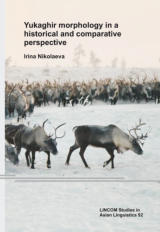
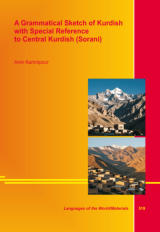
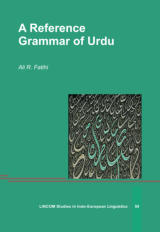
Yukaghir morphology in a historical and comparative perspective (2nd and revised ed.) Irina Nikolaeva SOAS, University of London The book describes the morphological system of Yukaghir in a historical perspective, and proposes the systematic reconstruction of the main aspects of Proto-Yukaghir inflectional morphology and the historical changes it went through. Proto-Yukaghir is shown to be strongly aligned with the grammatical profile of the Uralic and Altaic languages. In addition, the book discusses potential external cognates for a number of Yukaghir grammatical morphemes and constructions, evaluates some previous hypotheses in this respect, and proposes a number of novel interpretations, while abstaining from general conclusions regarding genetic relatedness. Morphological borrowings and contact-induced grammaticalization processes are also addressed. This second edition, considerably revised and corrected, incorporates new data, obtained in the course of recent fieldwork, and reflects several new analytical insights. ISBN 9783969392843 (Hardbound). LINCOM Studies in Asian Linguistics 92 (2nd and revised edition). 148pp. 2026. A Grammatical Sketch of Kurdish with Special Reference to Central Kurdish (Sorani) Amir Karimipour Ferdowsi University of Mashhad This work presents a grammatical sketch of the Kurdish language with special emphasis on Central Kurdish (Sorani). The study examines the linguistic structures of this dialect across six main chapters. The first chapter introduces the Kurdish language, its genetic classification, geographical distribution, and dialectal groups. The second chapter analyzes the phonological system of Sorani, including vowels, consonants, syllable structure, and phonological processes. The third chapter explores nominal morphology, focusing on nouns, pronouns, adjectives, and numerals. The fourth chapter addresses verbal morphology, examining the tense and aspect system, passive constructions, and the weakened ergative features characteristic of Sorani. The fifth chapter analyzes syntax, including word order (SOV), noun phrase and verb phrase structures, and various types of simple and complex sentences. The sixth chapter discusses lexical composition and word formation processes. Distinctive features of Sorani include: loss of grammatical gender, reduced ergativity, use of pronominal clitics, the Ezafe construction, and analytic formation of perfect tenses and passive voice. The grammar is supplemented with comprehensive appendices containing complete verb paradigms, noun declension patterns, and an extensive Kurdish-English wordlist. This study draws on native speaker data and previous research in Kurdish dialectology, providing a systematic description of Sorani's phonology, morphology, syntax, and lexicon, while highlighting both its shared features with other Kurdish dialects and its unique characteristics within the Kurdish language family. ISBN 9783969392829. Languages of the World/Materials 519. 126pp. 2026. A Reference Grammar of Urdu Ali R. Fatihi Aligarh Muslim University Urdu, a major South Asian language with over 100 million speakers, is known for its rich literary tradition and linguistic complexity, shaped by Perso-Arabic, Sanskrit, and Turkic influences. The present book, provides a comprehensive and systematic analysis of Urdu’s grammatical structure, serving as an authoritative resource for linguists, educators, language learners, and scholars. This grammar provides an exhaustive and systematic exploration of Urdu’s phonological system. Additionally, the grammar explores Urdu’s syllabic constraints and phonotactics, such as permissible consonant clusters and vowel harmony tendencies. It also explores the Nastaliq script’s orthographic conventions. It delves into morphology, covering noun declensions, verb conjugations, and the intricate system of case markers that define Urdu’s syntactic flexibility. The syntax section elucidates sentence construction, including word order variations (SOV as standard), complex predicates, and agreement patterns, with attention to both formal and colloquial registers. The grammar incorporates numerous examples drawn from contemporary spoken and written Urdu. Special emphasis is placed on Urdu’s unique features, such as its split ergativity and extensive use of compound verbs, which distinguish it from related languages. By addressing gaps in existing Urdu grammatical resources, this reference grammar facilitates deeper understanding and effective teaching of Urdu, contributing significantly to the preservation and study of its linguistic heritage. ISBN 9783969392690 (Hardbound). LINCOM Studies in Indo-European Linguistics 59. 198pp. 2026.
African languages ‒ Afroasiatic languages ‒ Arabic linguistics ‒ Asian languages ‒ Australian languages ‒ Austronesian
languages ‒ Caucasian languages ‒ Celtic languages ‒ Chinese linguistics ‒ English linguistics ‒ Finn-Ougrian languages ‒
French linguistics ‒ Germanic languages ‒ Indo-Aryan languages ‒ Indo-European languages ‒ Language isolates ‒ Languages
of Japan ‒ Native American languages ‒ Pacific languages ‒ Portugese linguistics ‒ Slavic languages ‒ Spanish linguistics
subject areas:
Anthropology ‒ Coursebooks in Linguistics ‒ Ethnolinguistics ‒ General Linguistics‒ Language and Literature ‒ Language
Typology ‒ Mathematics ‒ Pragmatics ‒ Semantics ‒ Sociolinguistics ‒ Textbooks in Linguistics ‒ Theoretical Linguistics
Translation


LINCOM GmbH, Hansjakobstr. 127a, D-81825 München, Allemagne
FAX+49 89 62269404, TEL +49 89 3149593, contact@lincom.eu